The Serengeti — Where the plains go on forever
The Serengeti is the oldest ecosystem on earth — a grassland so vast and so ancient that it predates the genus Homo. The animals here have been performing the same seasonal choreography for millions of years, and arriving in the right place at the right time of year, you feel the weight of that continuity in every direction.
The Great Migration is the largest overland animal movement on the planet — approximately 1.5 million wildebeest and 250,000 zebras moving in a continuous clockwise loop around the Serengeti and Masai Mara ecosystem, following the rains and the green grass they bring. There is no single best moment to witness it. Every month of the year offers something — calving season in the southern Serengeti between January and March, the river crossings of the Grumeti and Mara between June and September, the return south in October and November. The migration never stops. It only changes character.
The central Serengeti — the Seronera Valley — is one of the most reliably productive wildlife areas on earth, with year-round concentrations of prey and predators built around the permanent rivers. Lions sleep in the fever trees. Leopards cache their kills in the sausage trees above the riverbanks. Cheetahs scan the open plain from termite mounds and low kopjes. The density of predator activity here — in a single morning drive — regularly exceeds what a visitor to most other African reserves might see in a week.
The kopjes — ancient granite outcroppings that rise from the plain like small islands — are among the Serengeti's most photogenic features. They collect rainwater in their crevices, shelter resident populations of lions and rock hyraxes, and offer elevated vantage points from which predators watch the plains below. At dawn, with the light coming from the east and a pride of lions spread across the warm granite, a kopje is one of Africa's great photographic set pieces.
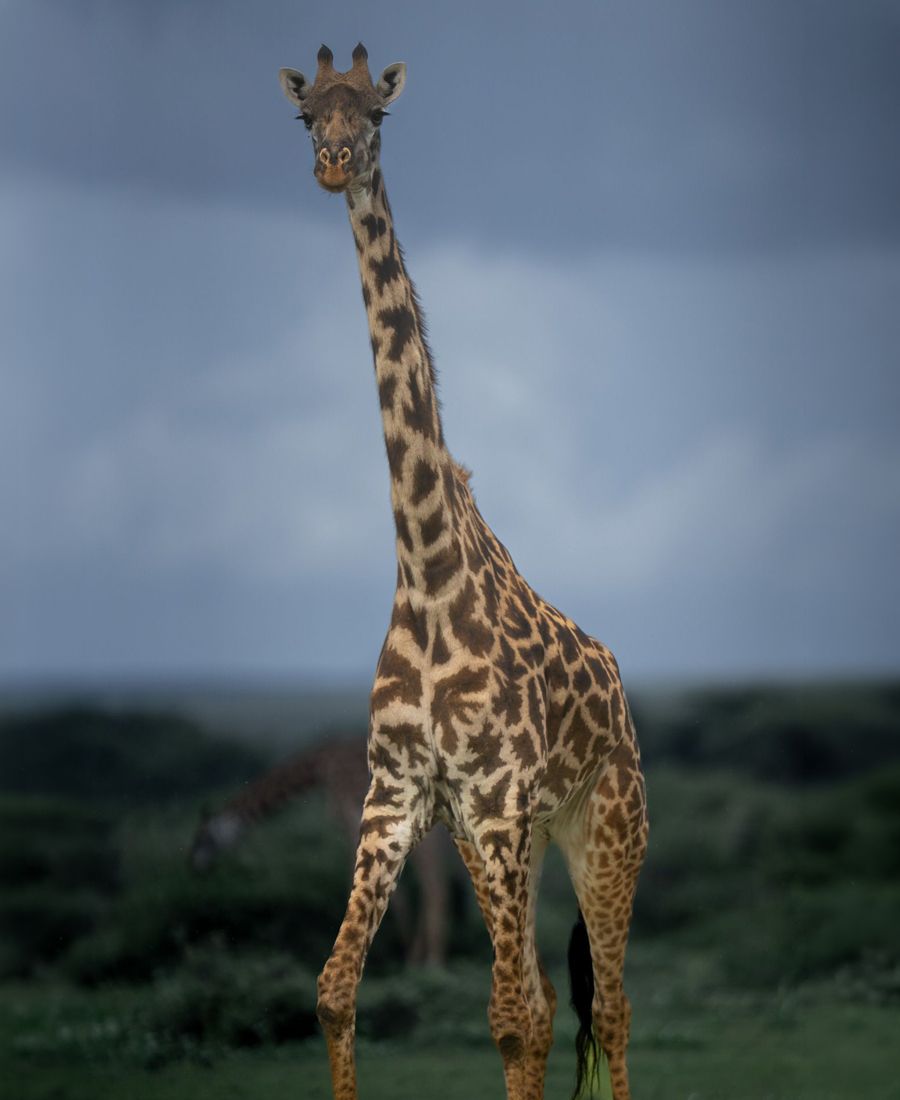
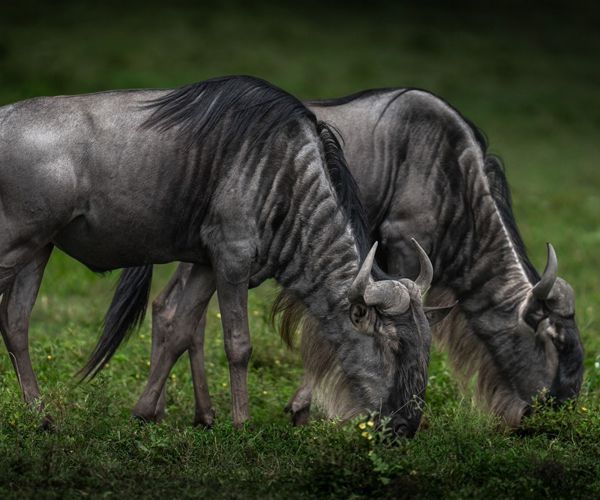
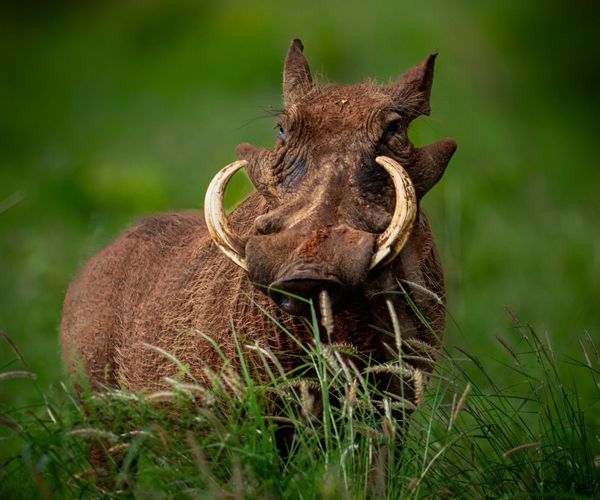
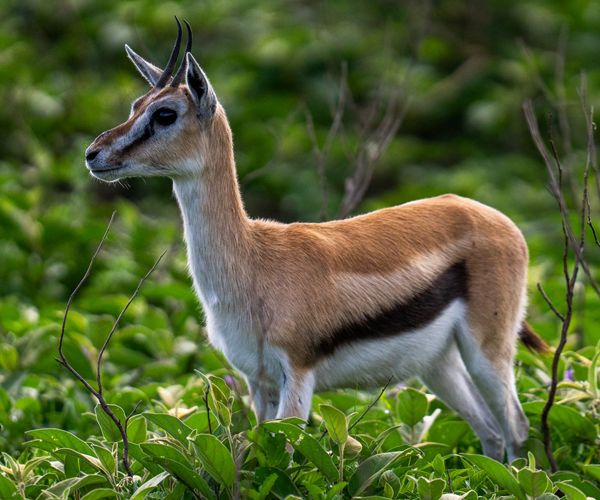
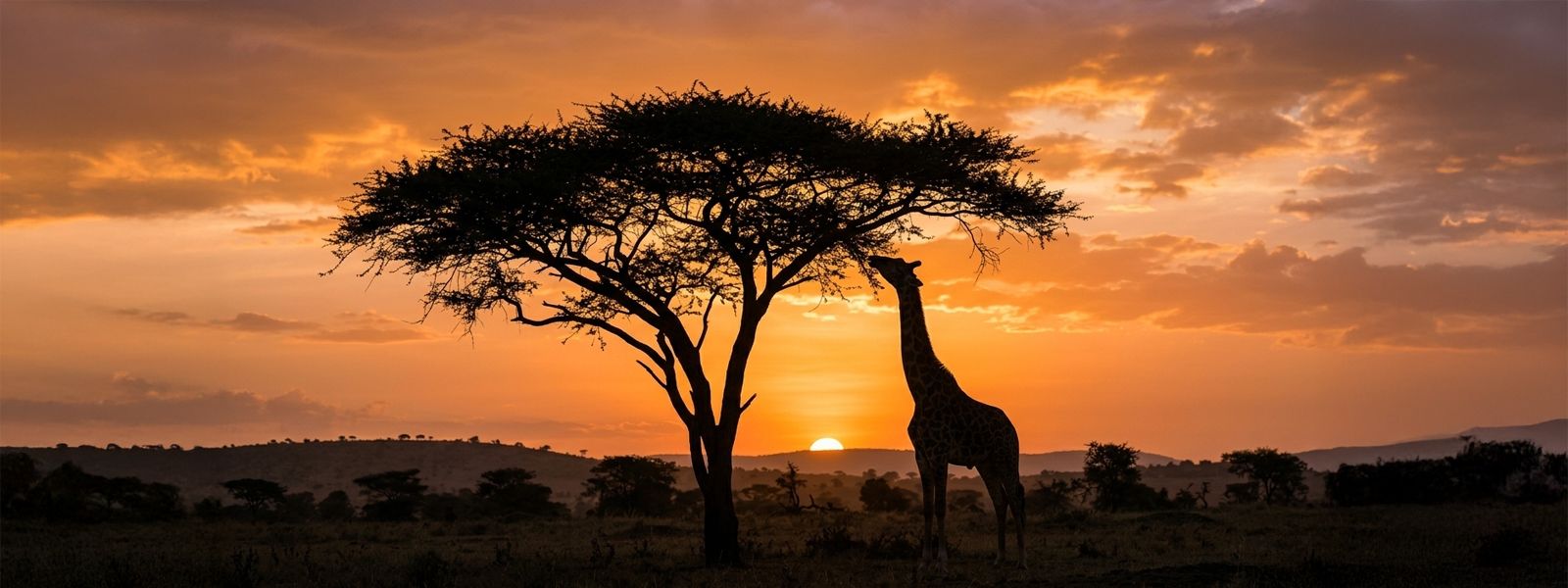
Left: A giraffe moving across the open Serengeti — the tallest land animal on earth, browsing at heights no other herbivore can reach. Right column, top to bottom: Wildebeest — the engine of the Great Migration; a warthog — one of the plain's most characterful residents; and a Thomson's Gazelle — the cheetah's preferred prey, built for speed.
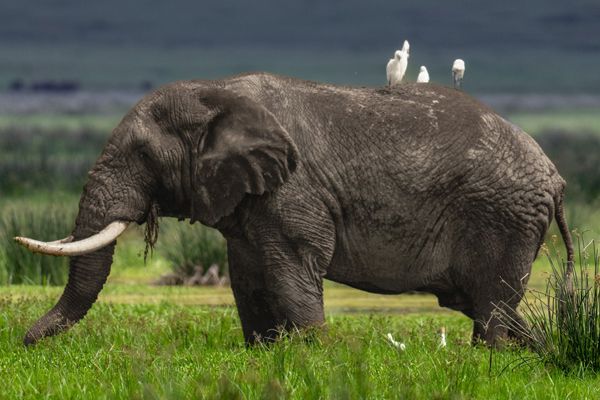
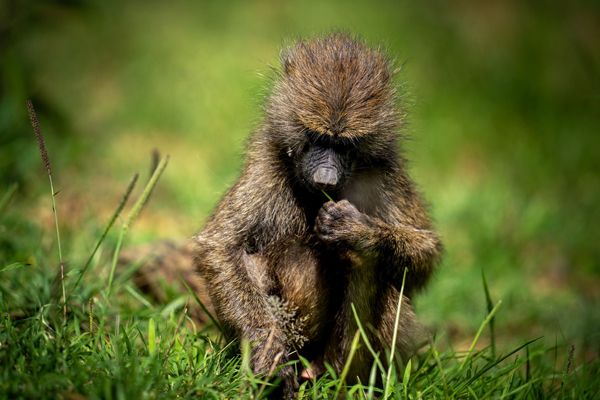
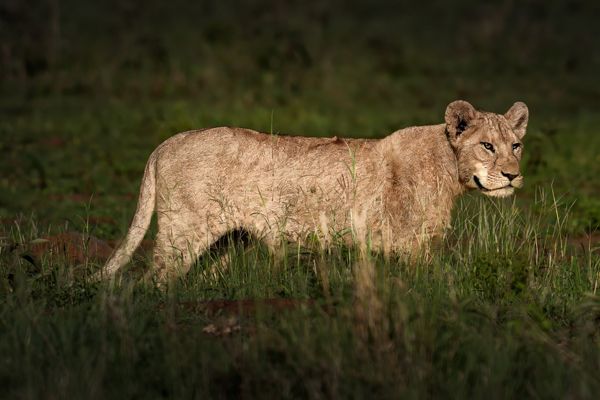
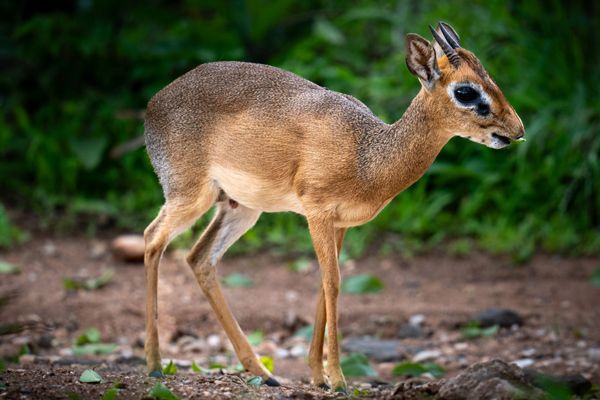
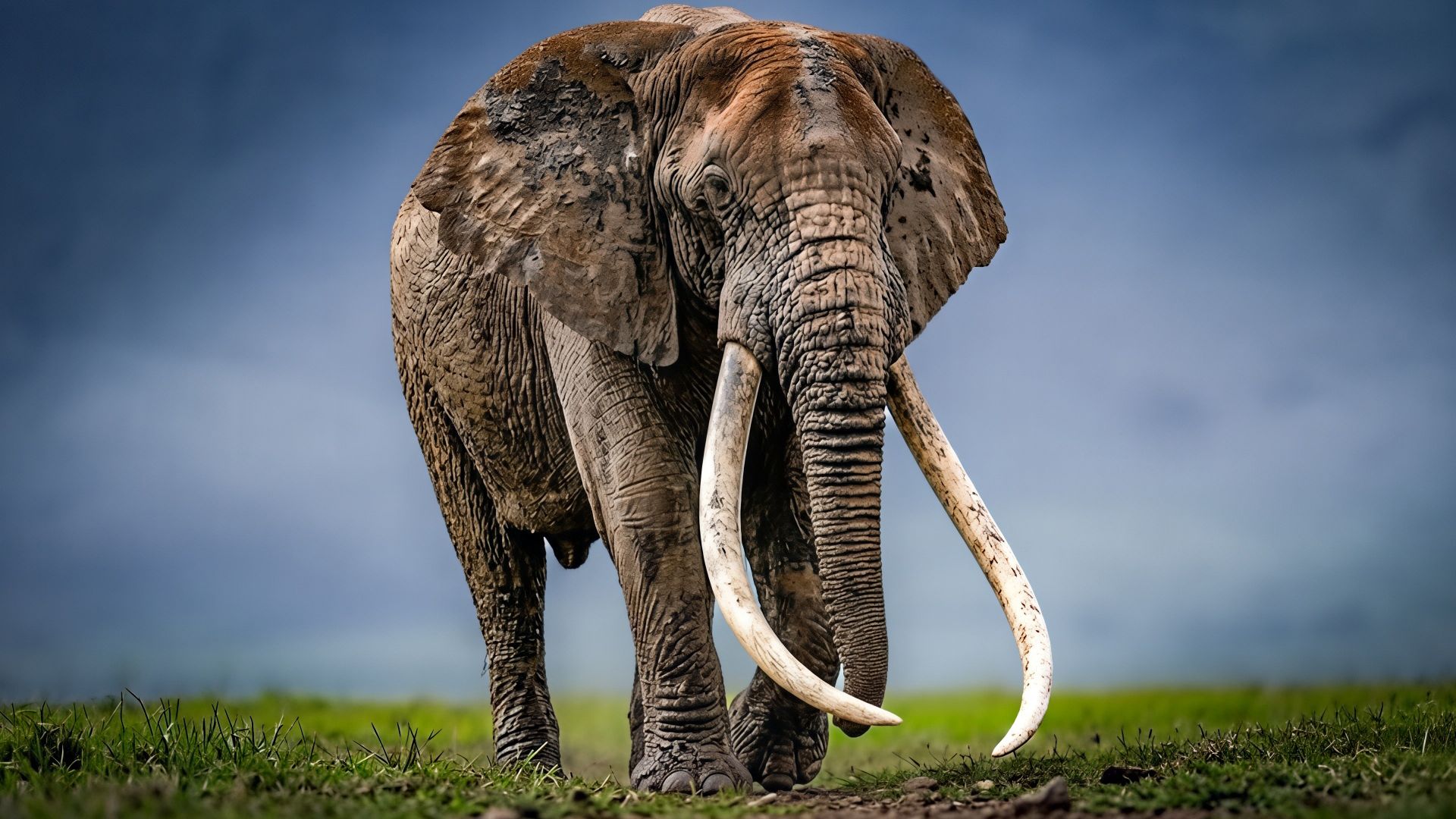
Left to right: An elephant crossing the plain — the Serengeti holds one of Africa's largest elephant populations; an adolescent baboon, whose curiosity about vehicles is entirely unreciprocated; a lion fixed on something in the grass ahead — the calm before a hunt; and the dik-dik, one of the world's smallest antelopes, which mates for life.
Ngorongoro — The crater that holds the world
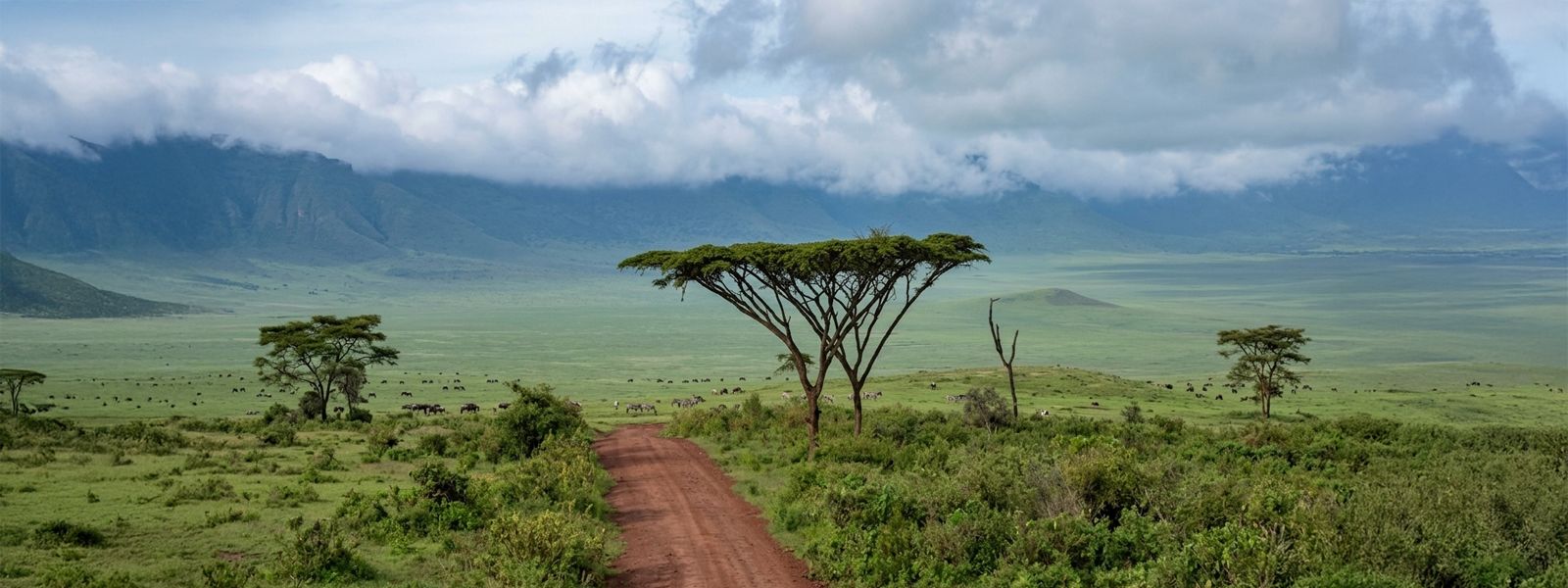
Twelve miles across. 2,000 feet deep. The caldera of an ancient collapsed volcano, now holding the densest concentration of wildlife on earth within its walls. Descending into Ngorongoro Crater for the first time is one of the genuinely vertiginous experiences that Africa offers — the scale of what you are looking at does not make itself understood until the rim is behind you and the floor opens up below.
Ngorongoro holds an estimated 25,000 large animals within its 102 square miles — a closed ecosystem where the animals rarely leave and the predators are resident year-round. The lion prides here are among the most studied in the world. The elephant bulls that remain in the crater tend to be among the largest in Africa, their tusks growing heavy with decades of use. A big tusker in the crater, moving through the morning mist with the crater wall rising behind him, is one of the defining images of East African photography.
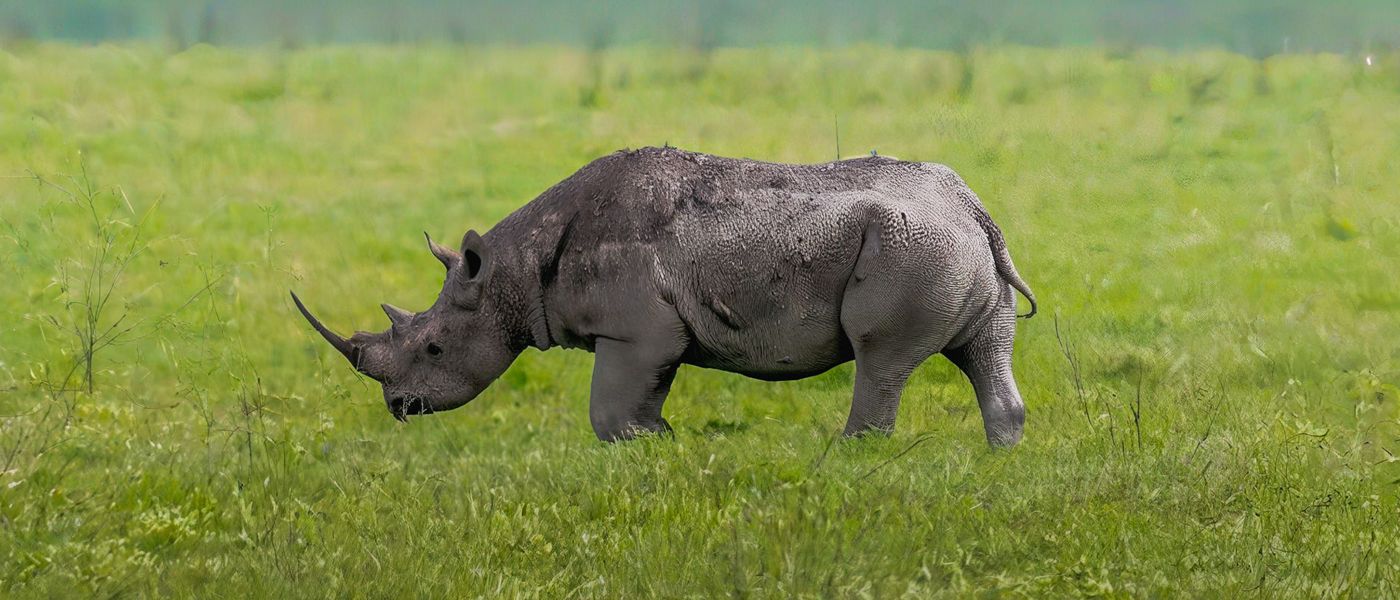
The crater also holds one of the last viable populations of black rhinoceros in Tanzania — roughly 26 animals, protected by a dedicated anti-poaching team and the natural walls of the caldera itself. A rhino sighting in Ngorongoro is never guaranteed, but the combination of permanent grassland, permanent water, and a closed terrain makes it among the most reliable places in Africa to find them. When a rhino appears — a grey prehistoric shape moving alone through the tall grass — the jeep goes quiet. Everyone understands what they are looking at.
The spotted hyenas of Ngorongoro are dominant predators in their own right — cooperative hunters that take wildebeest and zebra as efficiently as any lion pride, and whose clan structure is matriarchal, the females consistently larger and more dominant than the males.
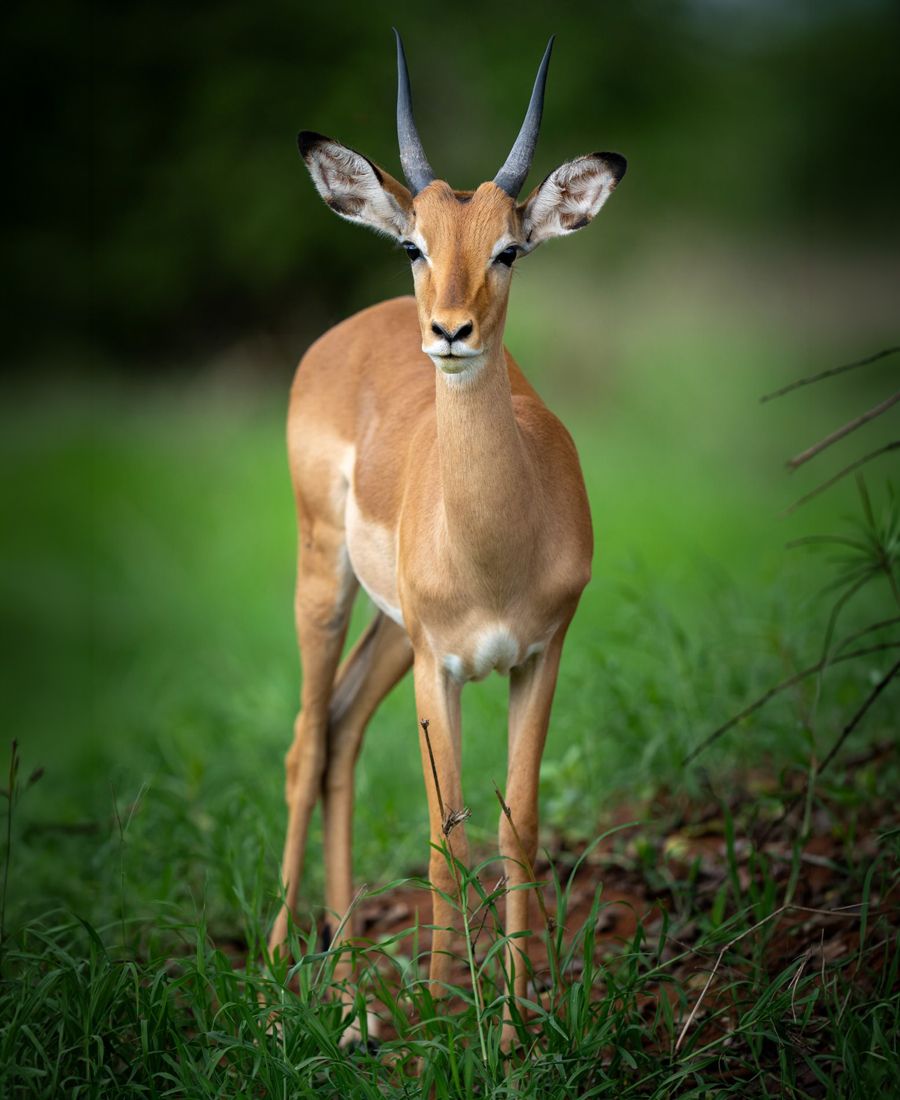
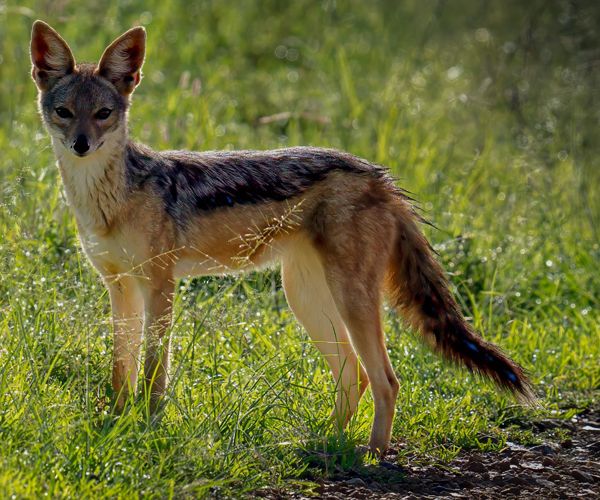
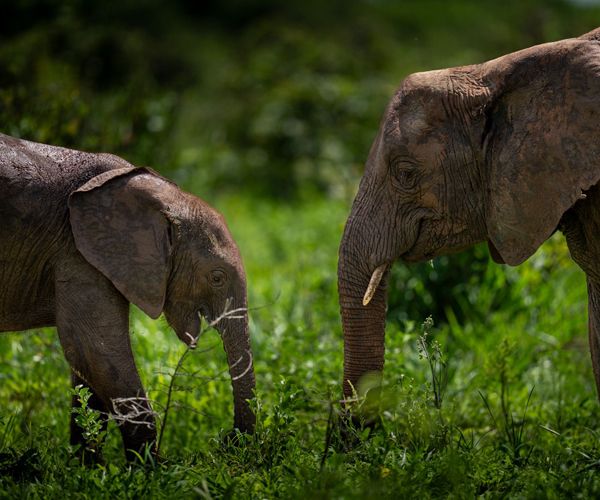
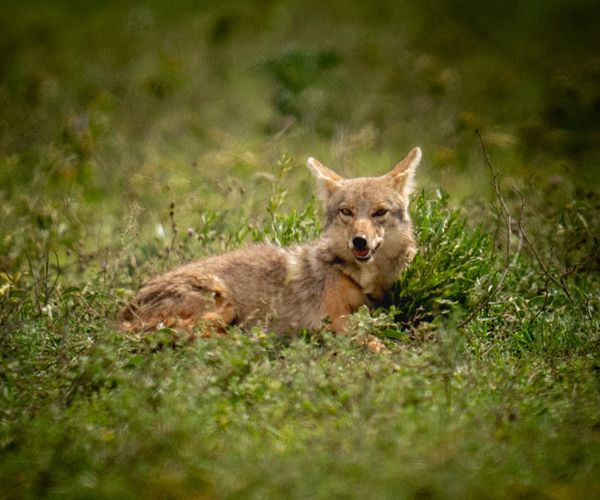
Left: An impala — the most numerous antelope in the ecosystem and the preferred prey of leopards, cheetahs, wild dogs, and lions simultaneously. Right column: A black-backed jackal; two elephant bulls — the brotherly bonds between adult males are long-term and structurally important to elephant society; and a golden jackal working the crater floor.
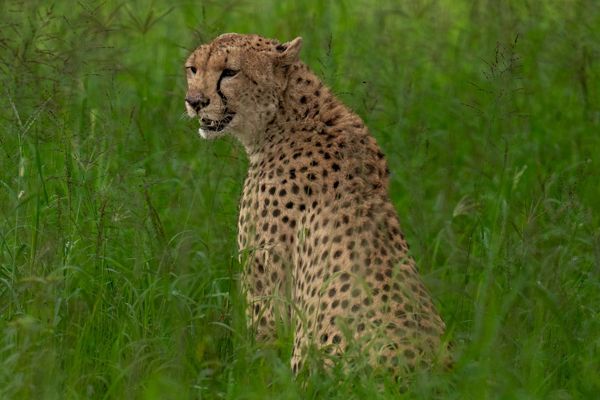
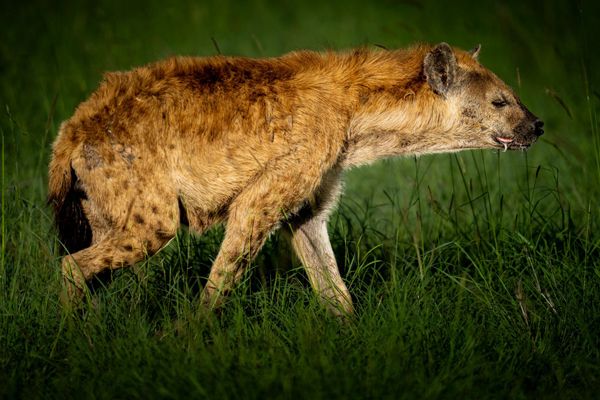
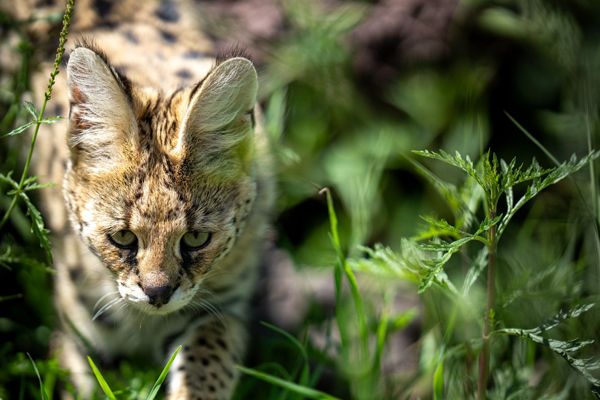
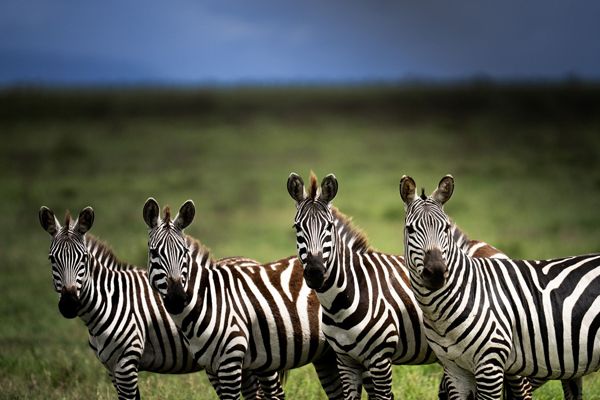
Left to right: A cheetah — the fastest land animal, capable of 70mph over short distances, but physically incapable of roaring; a spotted hyena — dominant predator in the crater, cooperative hunter, and one of the most intelligent carnivores in Africa; the serval cat, an ambush hunter of the tall grass; and a zebra — whose stripes are primarily an anti-fly mechanism rather than camouflage.
Ngorongoro is the only place on earth where you can see all of Africa's Big Five — lion, leopard, elephant, rhinoceros, and buffalo — in a single morning without leaving the crater floor. Most mornings, you can.
Wings over the plains — Tanzania's extraordinary birdlife
Tanzania has over 1,100 recorded bird species — more than any other country in Africa. Most safari visitors arrive focused on the big mammals and leave with a secondary obsession they did not anticipate: the birds. From the Lilac-Breasted Roller's absurd iridescence to the prehistoric silhouette of a Grey Crowned Crane, the avifauna of Tanzania competes with the mammals for attention at every turn.
The Lilac-Breasted Roller is perhaps Tanzania's most photographed bird — a compact roller with eight distinct colors in its plumage that catches the afternoon light with a brilliance that seems excessive even by the standards of a continent where excess is the norm. It perches openly on roadside branches and fence posts, seemingly aware of the attention, and holds its position long enough for the careful photographer to get the shot.
The Grey Crowned Crane is Tanzania's national bird — a tall, stately species whose red, white, and gold plumage and golden crown of stiff feathers make it one of the most visually distinctive birds in the world. They breed in the Serengeti's wetland margins and are increasingly threatened by habitat loss outside protected areas. In the crater, their bugling calls carry across the grassland at dawn.
The African Hoopoe, with its extraordinary fan crest and bold black-and-white wing pattern, is a ground feeder found across the ecosystem. The Red-Billed Hornbill — the inspiration for Zazu in The Lion King — is one of the most abundant birds of the dry woodland, its oversized red bill a piece of evolutionary engineering that functions as a temperature regulator as much as a feeding tool.
The Baby Baboon — while not a bird — deserves its own mention here. Riding on their mothers' backs for the first months of life, newborn baboons are among the most photographed subjects in the Serengeti, their wide curious eyes and pink faces a stark contrast to the formidable adult olive baboon they will become.
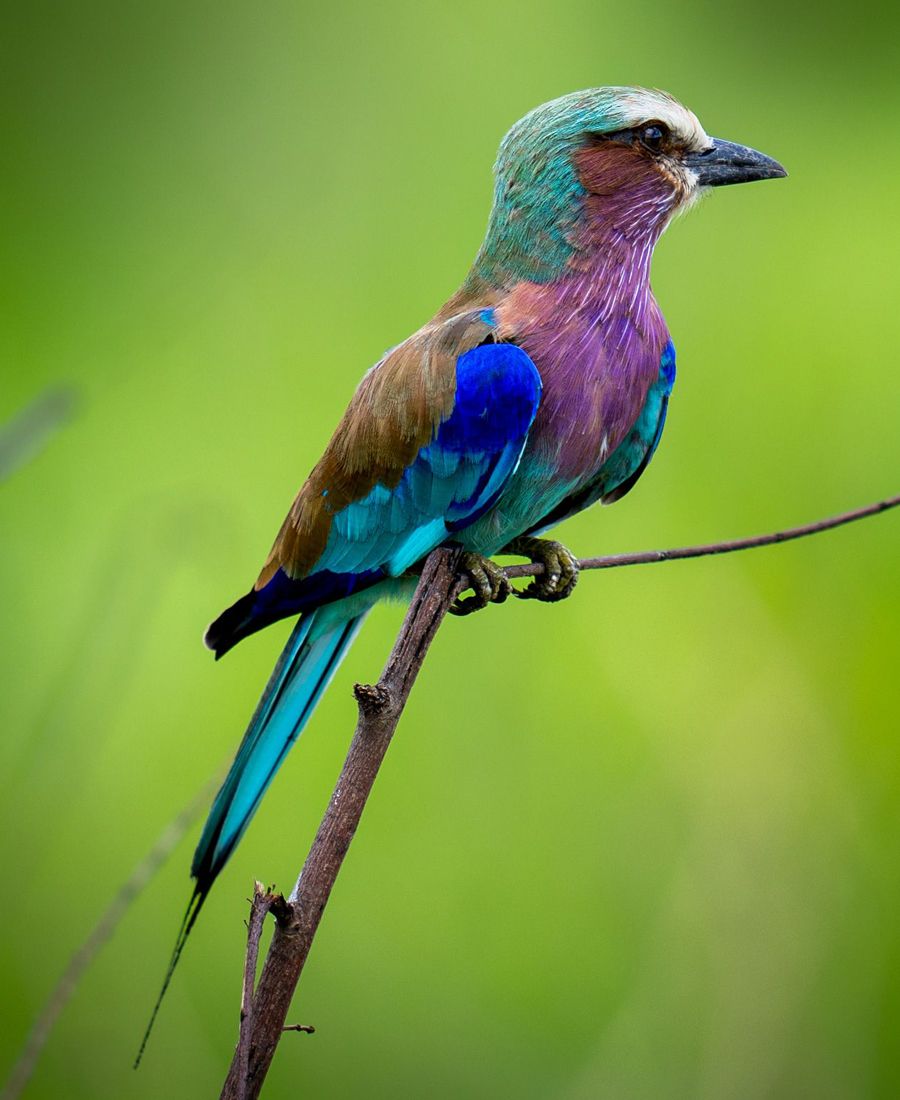
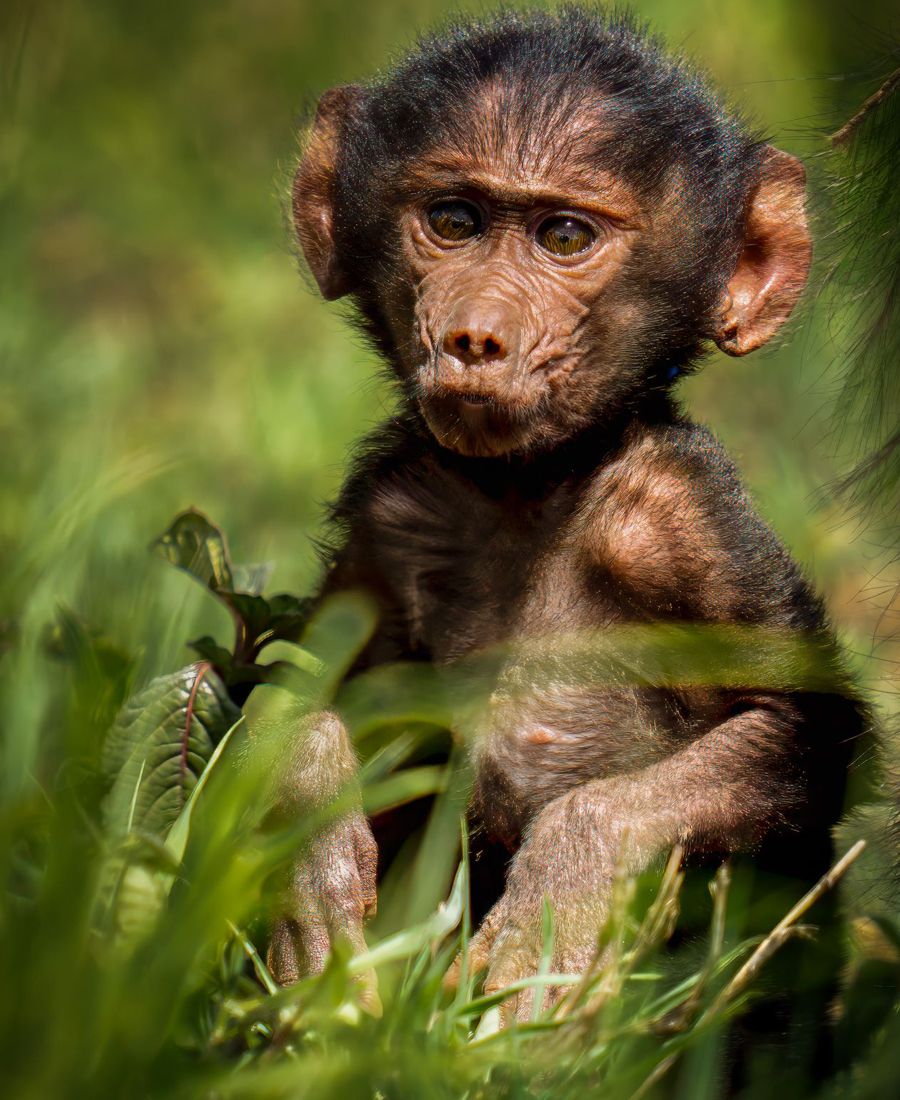
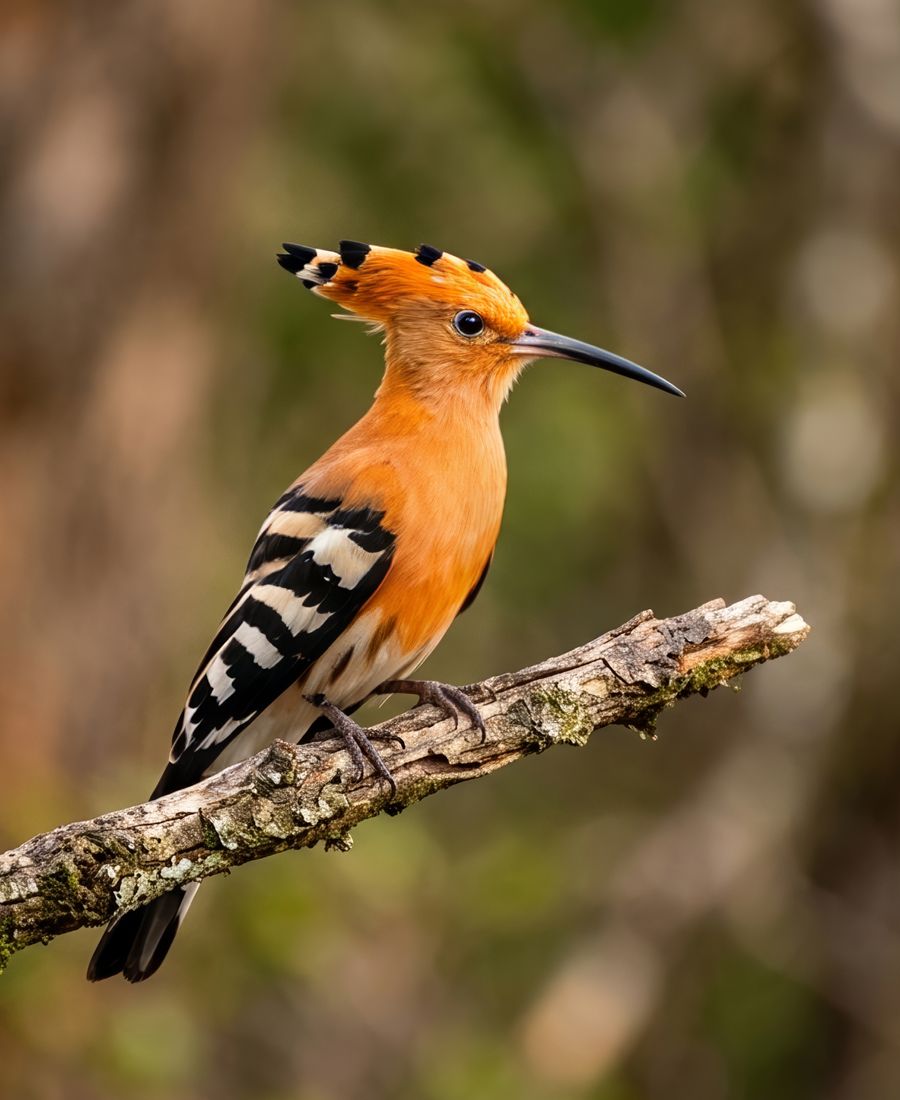
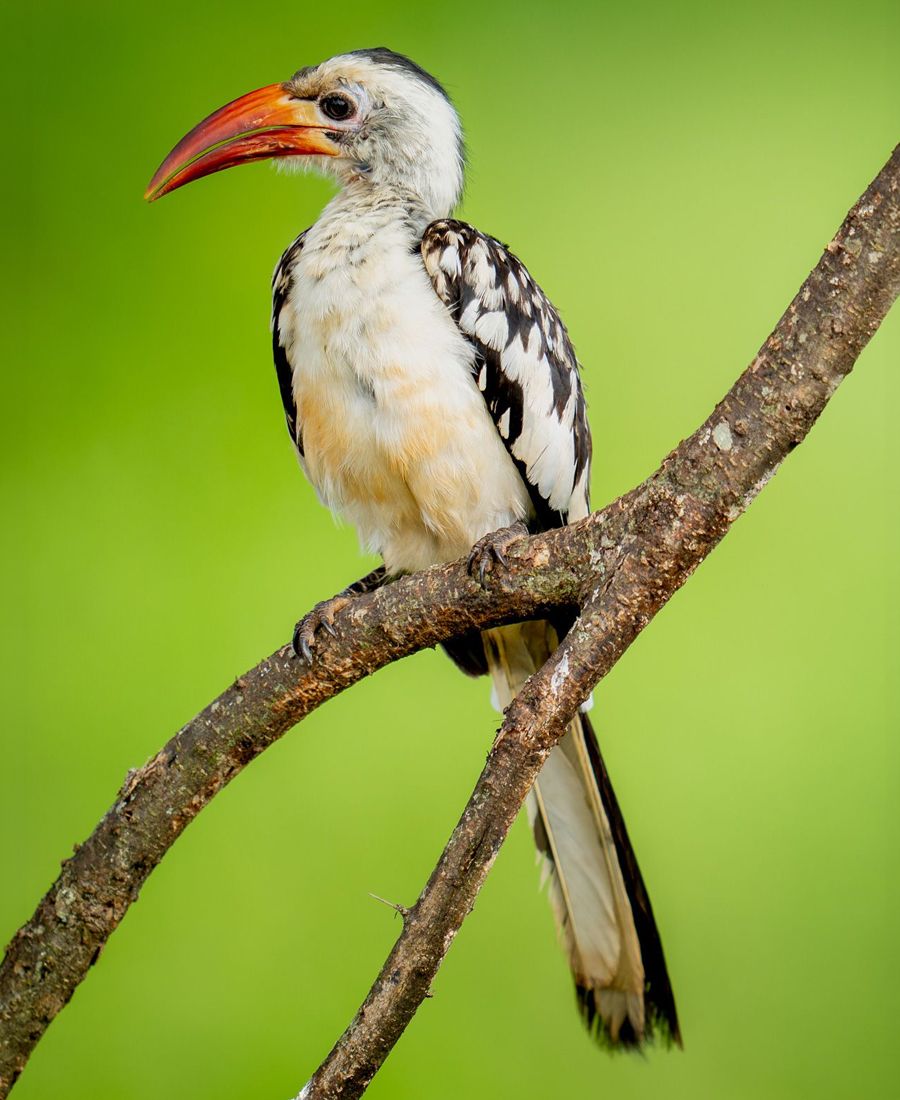
Left: The Lilac-Breasted Roller — eight colors in a single bird, photographed on a Serengeti perch in afternoon light. Right column: A baby baboon on its mother's back; the African Hoopoe with its extraordinary fan crest; and the Red-Billed Hornbill — the avian inspiration for Zazu in The Lion King.
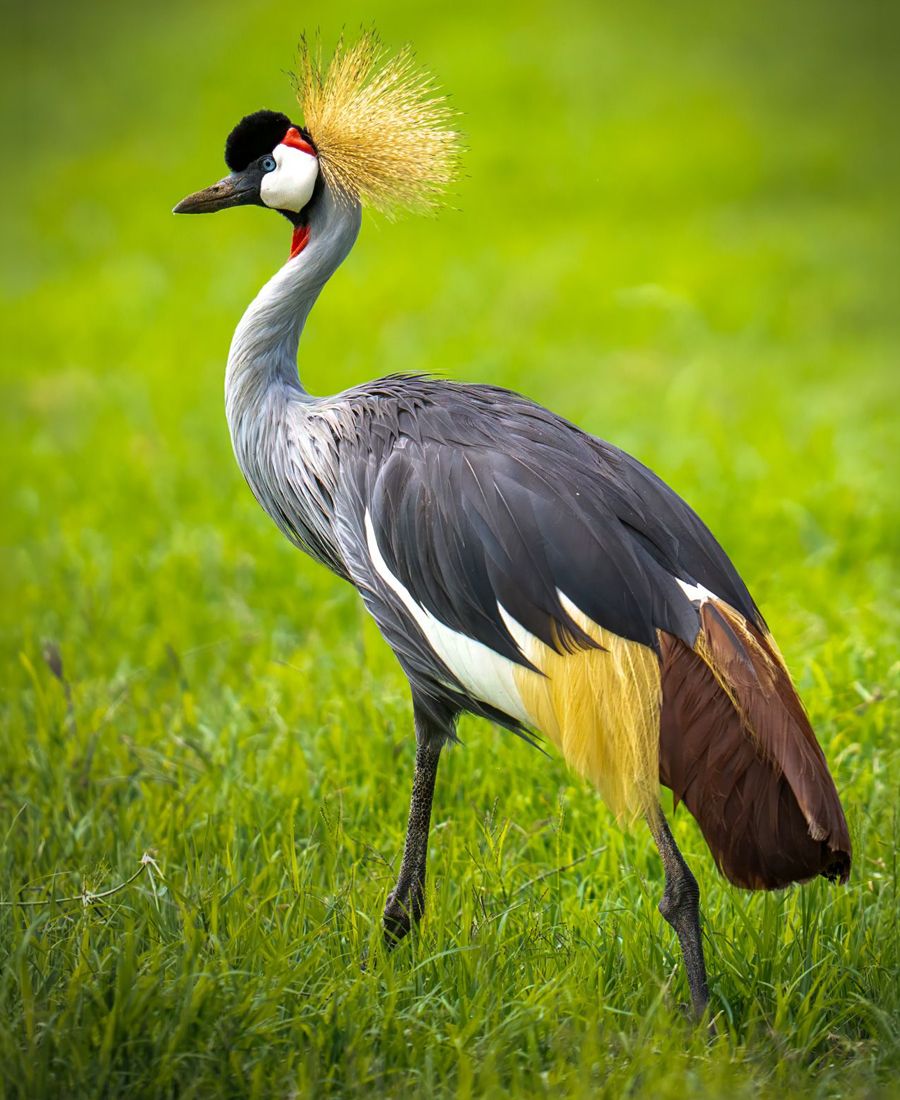
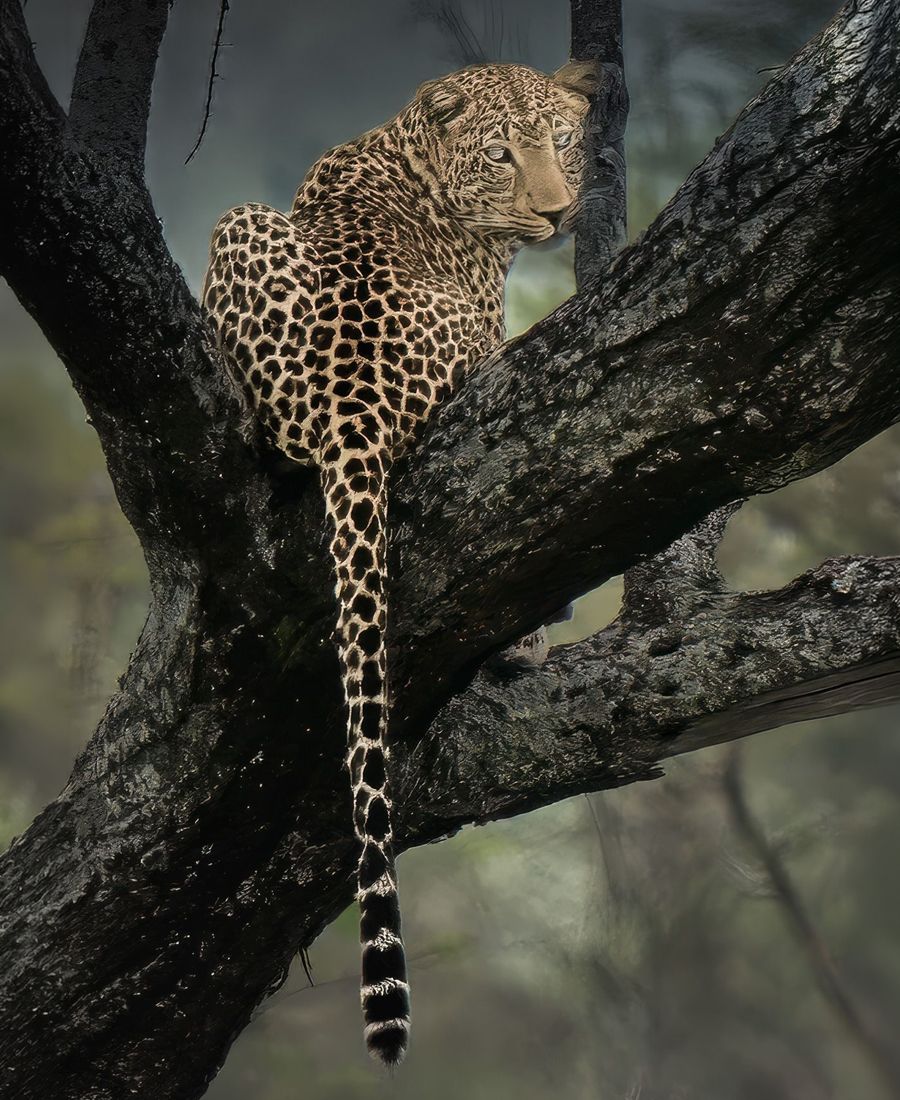
Left: The Grey Crowned Crane — Tanzania's national bird, its golden crown of stiff feathers one of the most distinctive silhouettes in the African sky. Right: A leopard at rest in the canopy — the most secretive of Africa's large cats, using the tree as both a larder and a vantage point invisible to everything below.
Predators & Prey — The contract that runs the ecosystem
The Serengeti-Ngorongoro ecosystem contains the highest density of large predators anywhere on earth. Lions. Leopards. Cheetahs. Wild dogs. Hyenas. Servals. Jackals. Each occupies a different ecological niche, hunts different prey, operates at different times of day, and together they constitute a predator-prey relationship of extraordinary complexity that has been running, without interruption, since before modern humans existed.
The leopard is the most solitary and most secretive of the big cats — an animal that most first-time visitors to Africa do not see at all, and that experienced guides find by reading a landscape rather than by following tracks. The fever trees along the Seronera River in the central Serengeti are among the most reliable leopard habitat in Africa, their horizontal branches perfect for draping a cat that has spent the night hunting and prefers to spend the day invisible.
The cheetah operates differently — a daylight hunter that relies on acceleration rather than concealment, using termite mounds and kopjes as observation platforms before beginning a chase that can reach 70 miles per hour over 300 meters. The open plains of the southern Serengeti are the best cheetah habitat in the world, and in good conditions a cheetah hunt is visible from a kilometer away before it begins.
The serval cat is smaller and far less frequently photographed than the big cats — a solitary hunter of the tall grassland margins that uses its extraordinary hearing, mounted in dish-like ears, to locate rodents and birds moving beneath the grass. A serval hunt — a vertical leap of two meters, both forepaws driving down onto an invisible target — is among the most athletic things a camera will be asked to capture in Tanzania.
Tanzania is not simply a wildlife destination. It is a functioning ecosystem — ancient, intact, and still operating at its original scale. There is nowhere else on earth quite like it, and there may not be for much longer. Go now.
Experience Tanzania
through Jango's lens
Safari expeditions to the Serengeti and Ngorongoro — timed around the migration, the calving season, or the predator density of the dry season. Photography-focused, small group, and built around the light.
Inquire About a Workshop More Destinations