The Southeast — Where rainforest meets the sea
Alaska's southeastern panhandle is wetter, wilder, and more compressed than the rest of the state — mountains drop straight into the ocean, and communities that the road system never reached are accessible only by sea or air. This is Alaska before the crowds find it.
Ketchikan receives more rainfall than almost anywhere in the United States — over 150 inches a year. The temperate rainforest that blankets the hillsides turns every shade of green imaginable. Homes perch on stilts above the Tongass Narrows, their reflections wavering in the tidal channel below. The famous Creek Street boardwalk, built over Ketchikan Creek, was once the town's red-light district — now it is one of the most photographed streets in Alaska, and for good reason.
The waters around Juneau, Alaska's capital and the only US state capital unreachable by road, are among the most productive marine feeding grounds in the world. Humpback whales gather here in summer to feed on massive schools of herring — sometimes working together in a remarkable cooperative hunting behavior called bubble net feeding, where a group of whales blows a rising spiral of bubbles to trap fish before lunging upward through the surface together. To witness it from a small boat is to understand the scale and intelligence of these animals in a way that no documentary can replicate.
The coastal forests around Hoonah are some of the most productive brown bear habitats in Southeast Alaska. Bears emerge in summer to feed on salmon in the stream systems — often within sight of the water's edge, close enough that patience and a long lens are the only requirements.
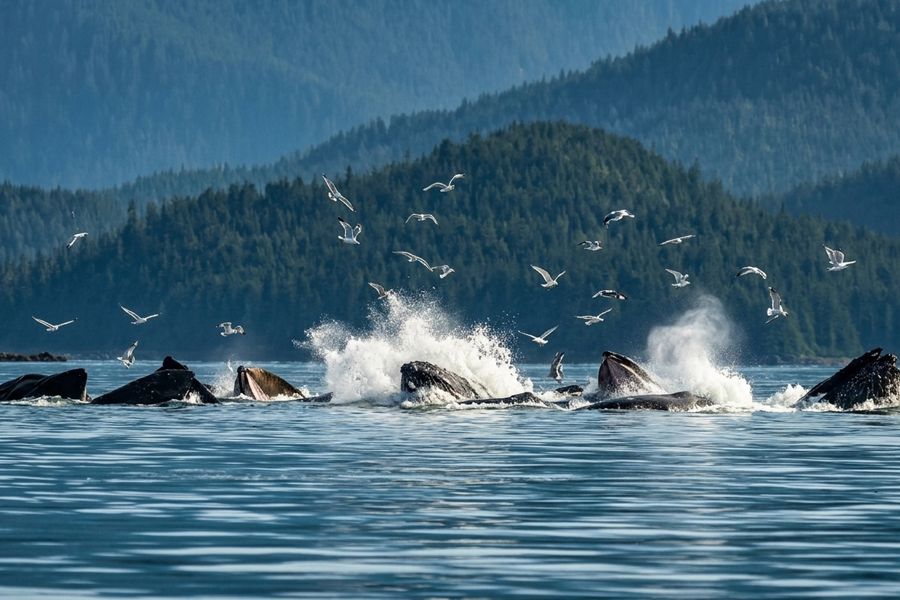
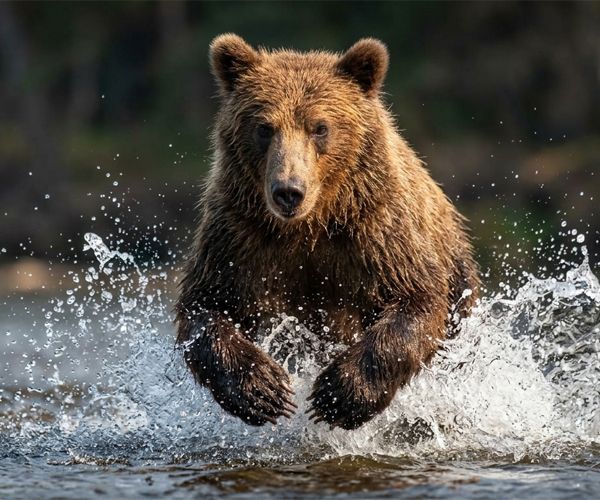
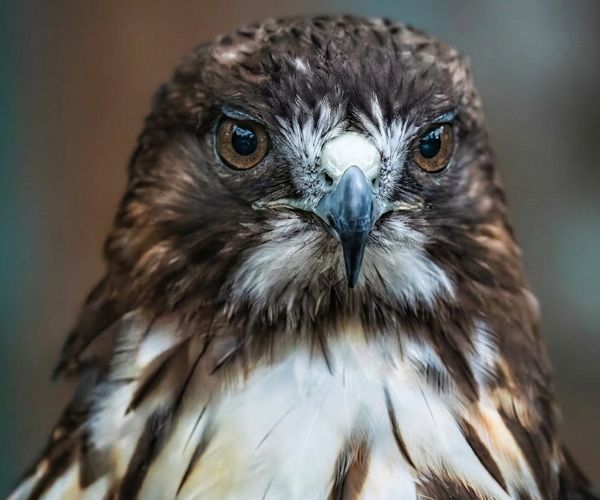
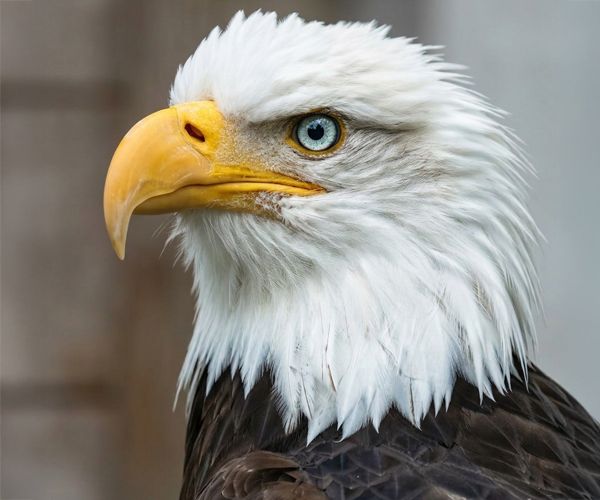
Clockwise from left: Humpback whales bubble net feeding in the waters off Juneau — one of the great cooperative wildlife behaviors on earth; a brown bear fishing for salmon in Hoonah; a red-tailed hawk; and a bald eagle — Ketchikan's most visible residents.
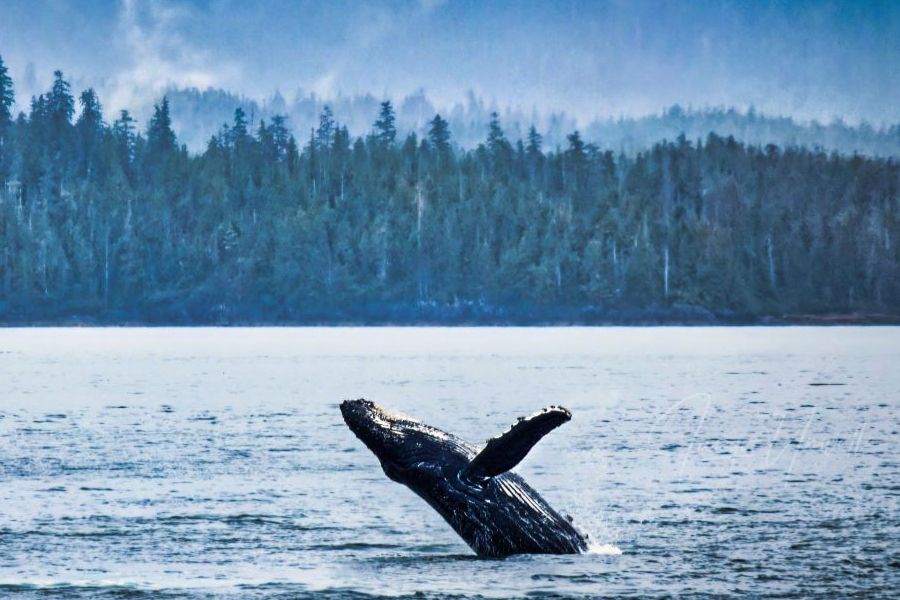
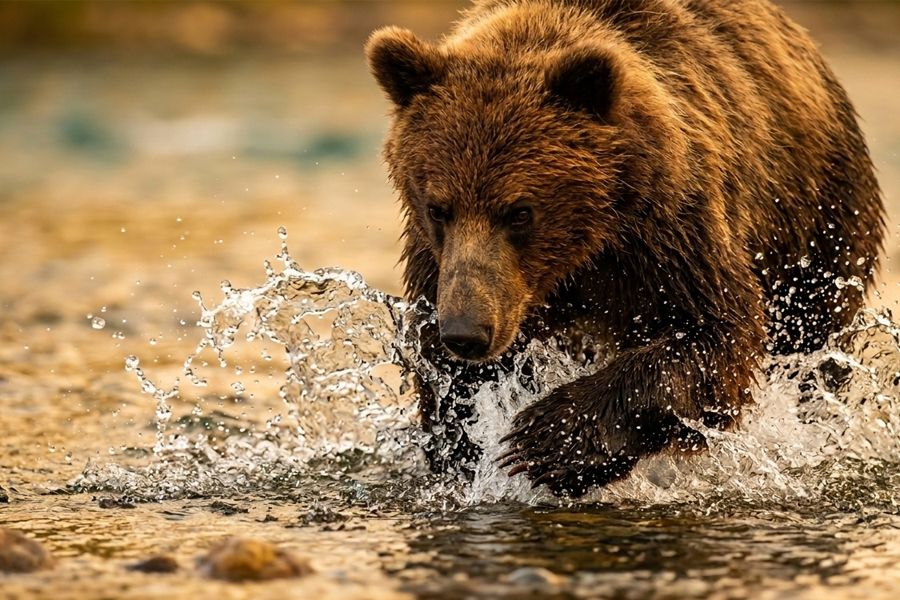
Left: A humpback whale breaches off Juneau — a reminder that the ocean here is as rich with life as the forest above it. Right: A brown bear works a salmon pool in Hoonah — patient, methodical, completely focused.
Ice & Silence — The glaciers of Southeast Alaska
There is a particular quality of silence in front of a tidewater glacier that exists nowhere else on earth. Not the silence of absence — the ice cracks, groans, and occasionally fractures in a sound like distant artillery — but the silence of scale. You are small. The glacier is not.
Glacier Bay National Park is one of the great wilderness destinations on earth — 3.3 million acres of rugged mountains, dynamic glaciers, and ocean waters teeming with wildlife. The Johns Hopkins Glacier sits at the head of its namesake inlet, so heavily laden with calving ice that vessel access is restricted to protect the harbor seal pupping grounds below the surface. On a calm day the inlet is so quiet you can hear individual ice crystals settling.
Hubbard Glacier, at 76 miles long, is the largest tidewater glacier in North America and one of the few in Alaska still advancing. Approaching by boat, the ice wall rises 30 meters above the waterline — blue, fractured, alive with the sound of its own slow movement. When a section calves — and it will, if you wait — the wave it sends across the inlet rocks the boat hard enough to remind you exactly where you are.
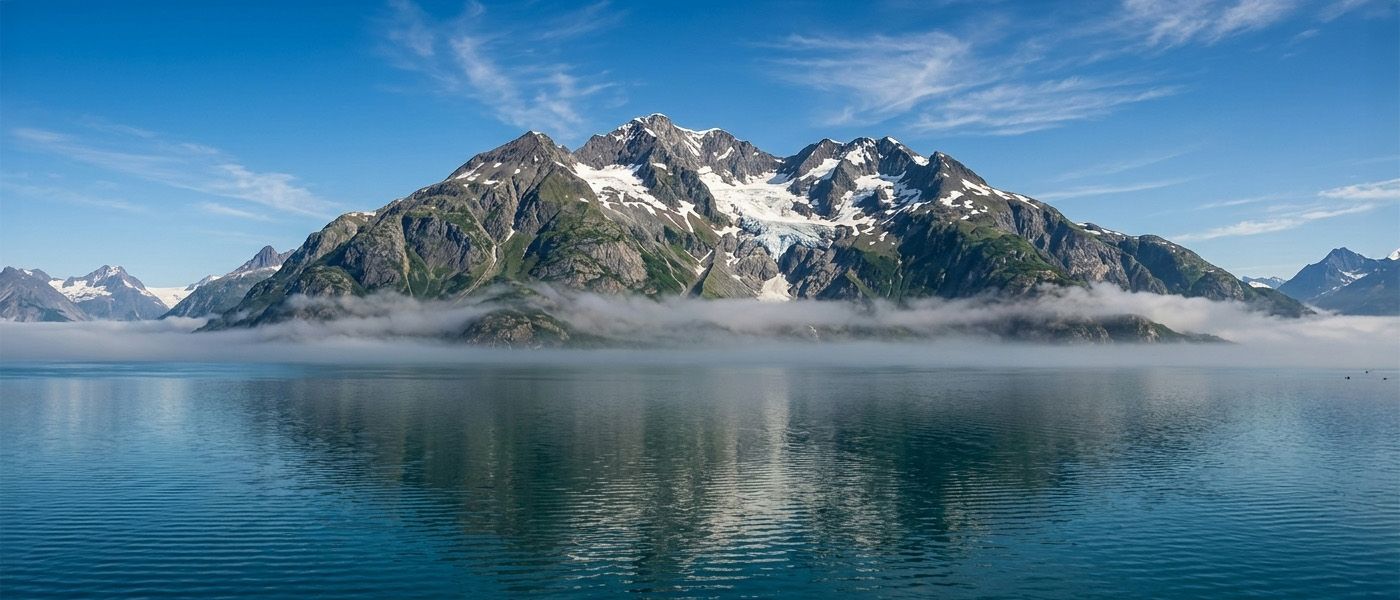
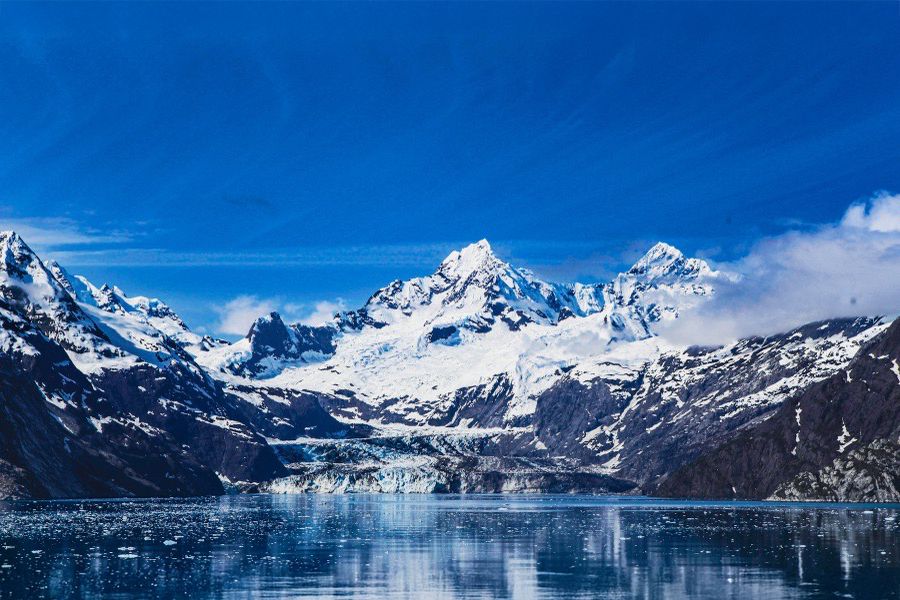
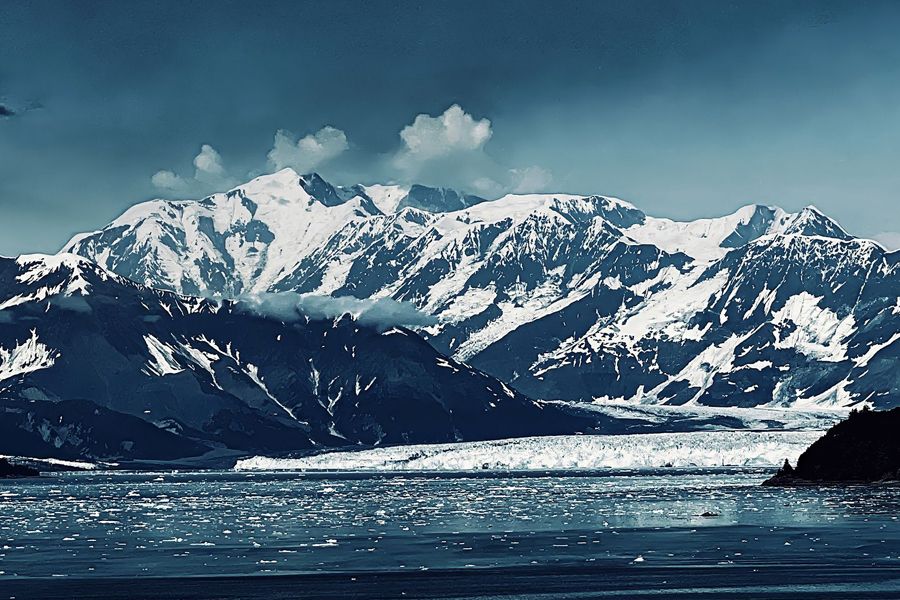
Left: Johns Hopkins Glacier — the blue in the ice comes from compressed ancient air forced out of the crystalline structure over thousands of years. Right: Hubbard Glacier — still advancing, still calving, one of the few glaciers in Alaska that is growing rather than retreating.
Standing in front of Hubbard Glacier in a small boat, watching a fifty-meter column of ice detach and fall into the sea, you understand why Alaska photographers keep returning. The landscape performs.
Denali & Fairbanks — Under the mountain's shadow
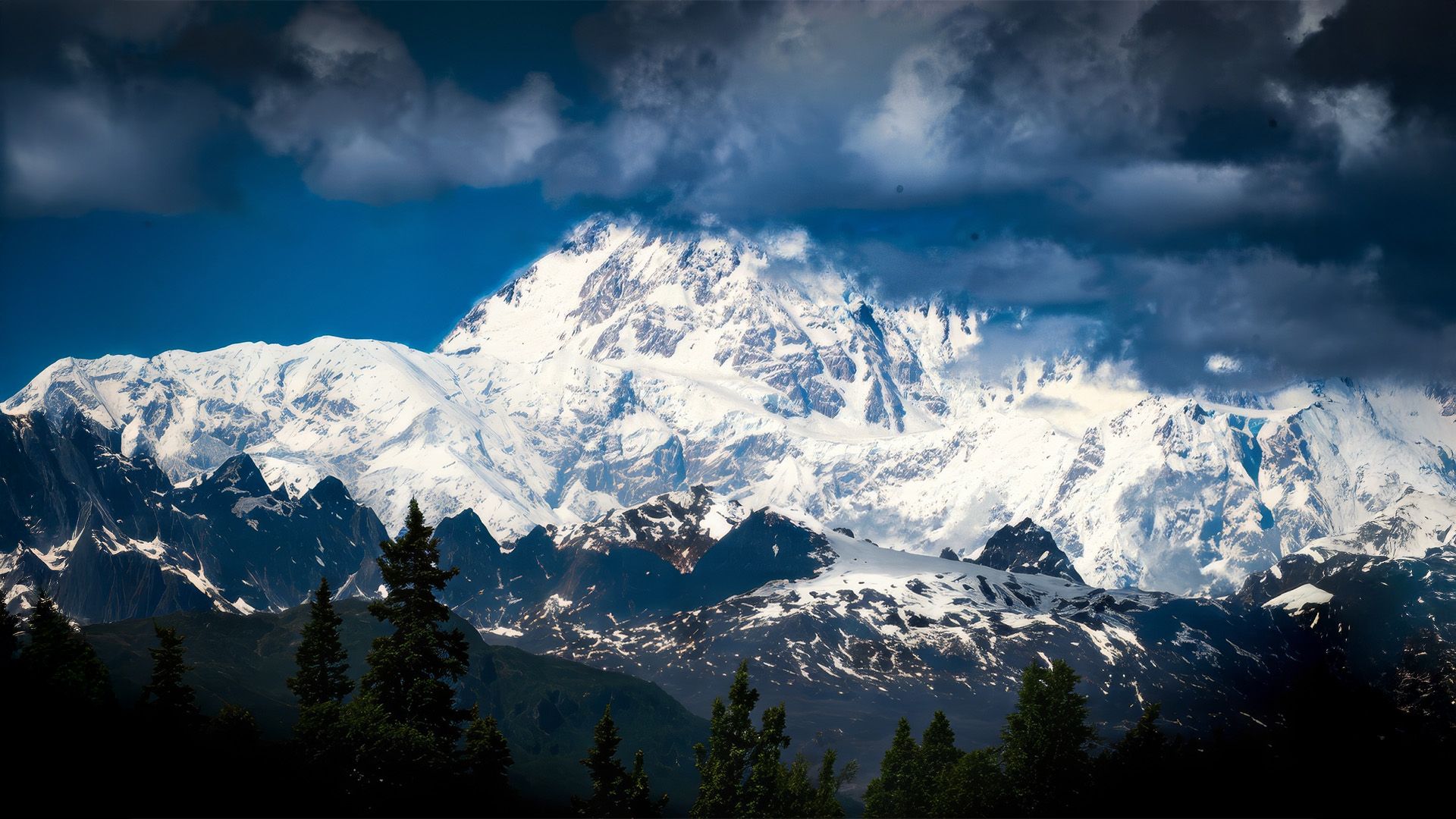
Denali does not always show itself. The mountain generates its own weather systems, wrapping itself in cloud for days at a time. When it does appear — the full 6,194 meters rising from a base barely 600 meters above sea level — the effect is incomprehensible. No photograph has ever done it justice. That is not a reason to stop trying.
The approach through Denali National Park on the single unpaved road is a six-to-eight-hour journey that functions as a rolling wildlife safari. Private vehicles are restricted beyond the first 15 miles — a decision that has kept the park's interior genuinely wild. Brown bears wander across the road with the unhurried confidence of animals that understand, correctly, that they have the right of way.
Fairbanks earns its place on the itinerary for the aurora borealis. Sitting near the auroral oval, it produces the most consistent northern lights displays in accessible North America. Between late August and April, clear nights deliver curtains of green and white light that occupy the entire sky — a spectacle that no camera setting fully captures, and that no photographer fully forgets.
Just outside Fairbanks, moose are a common sight — including right at the edge of the city itself. Alaska's largest wild resident, a bull moose can stand over six feet at the shoulder and weigh close to 1,500 pounds. They move through the landscape with a slowness that suggests they have never needed to hurry.
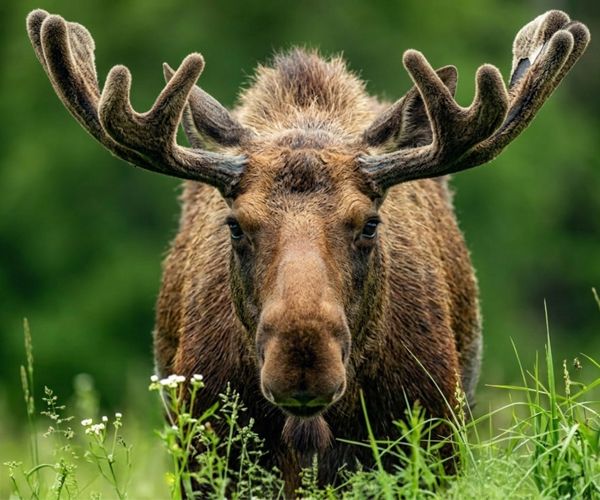
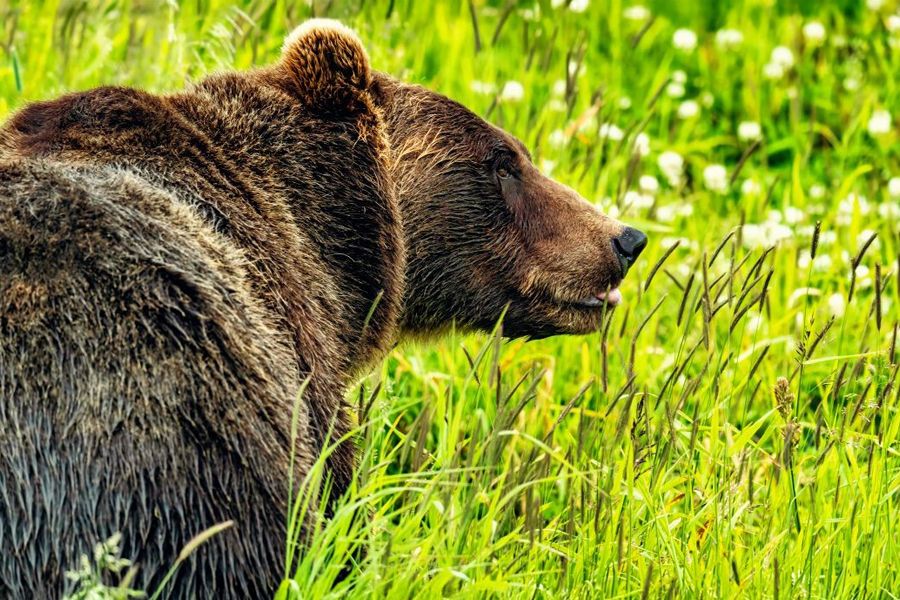
Left: A moose grazes at the edge of Fairbanks — Alaska's largest mammal, unbothered by the proximity of the city. Right: A brown bear on a trail in Denali National Park — on the park road, wildlife always has the right of way.
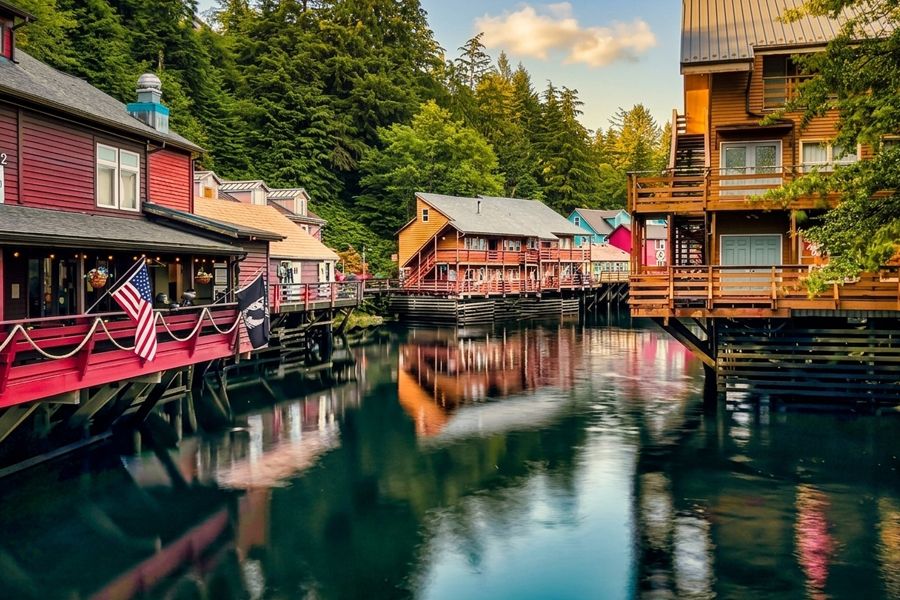
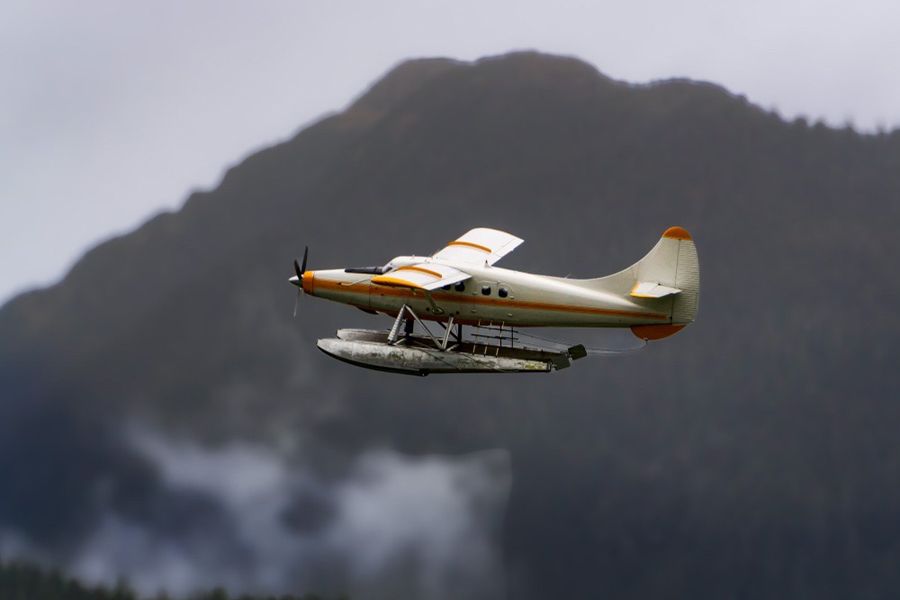
Left: Homes perched above the water in Ketchikan — a town built on stilts where the rainforest meets the sea. Right: A bush plane on a remote airstrip — in Alaska, this is not a novelty. It is infrastructure.
Katmai & Lake Clark — The bear coast
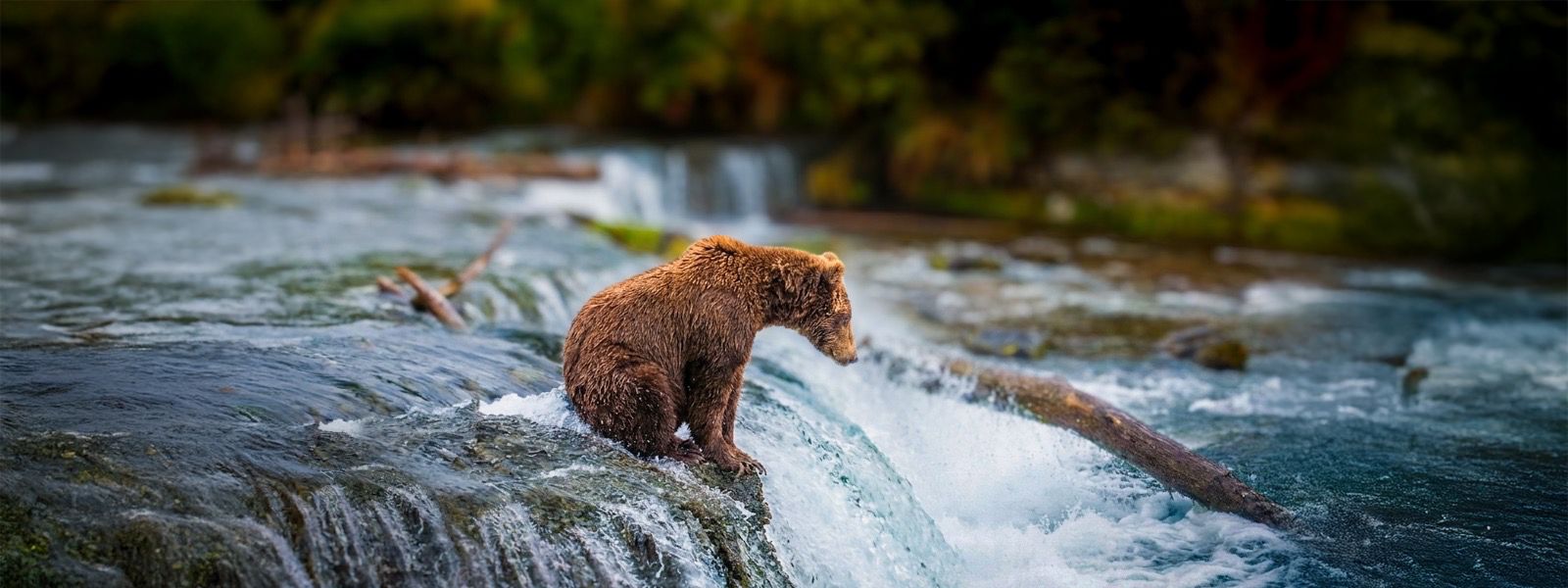
July at Brooks Falls, Katmai National Park. Forty or more brown bears positioned at a twelve-foot waterfall, waiting for sockeye salmon to leap directly into their open mouths. It is one of the great wildlife spectacles on earth — concentrated, primal, and completely indifferent to the photographers on the viewing platform twenty meters away.
Katmai protects the largest population of brown bears in the world — roughly 2,200 animals. The sockeye salmon run on the Brooks River peaks in July and again in September, drawing bears from across the watershed. During peak season, bears fish shoulder to shoulder, establishing a strict hierarchy at the prime positions. The dominant bears hold the best spots. The younger and smaller ones learn patience at the margins.
Lake Clark National Park, accessible only by small plane from Anchorage, offers a different encounter entirely. The bears here feed on sedge grass in spring and clams on the tidal flats before the salmon arrive — watching a 600-pound bear dig methodically for shellfish on a beach with no other humans in sight is a reminder that Alaska's wilderness is simply continuing, whether or not anyone is watching.
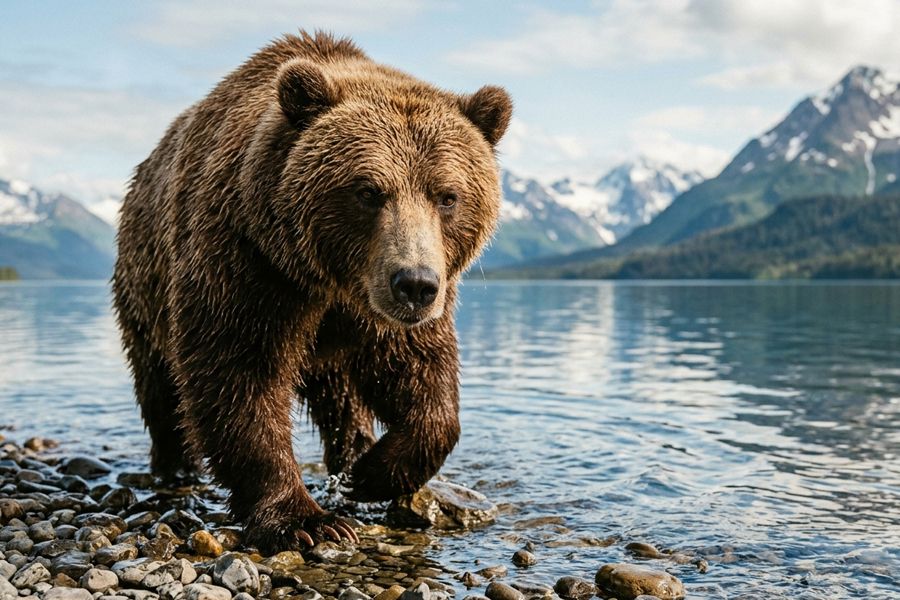
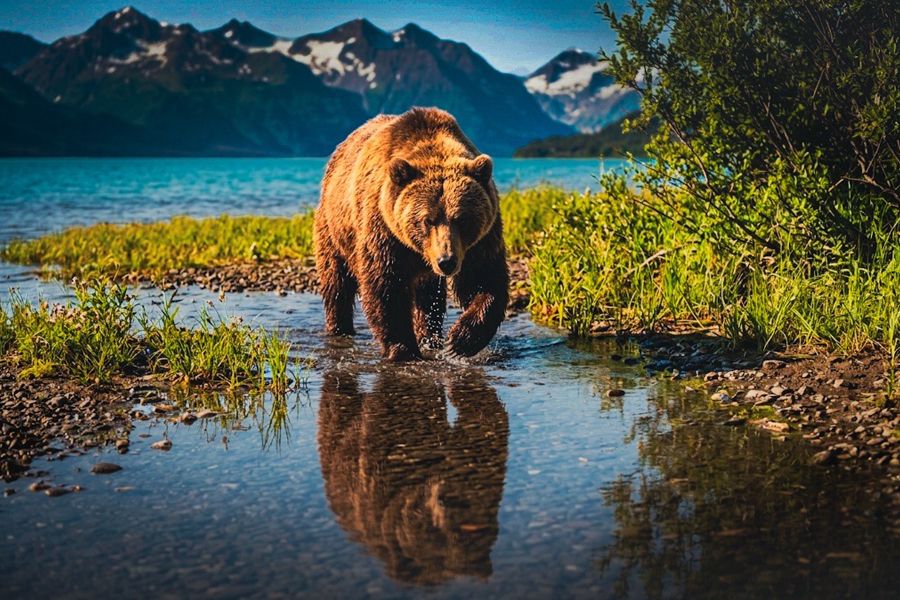
Brown bears at Lake Clark National Park — accessible only by bush plane from Anchorage. Without road access, the bears here have almost no exposure to human disturbance, and their behavior reflects it.
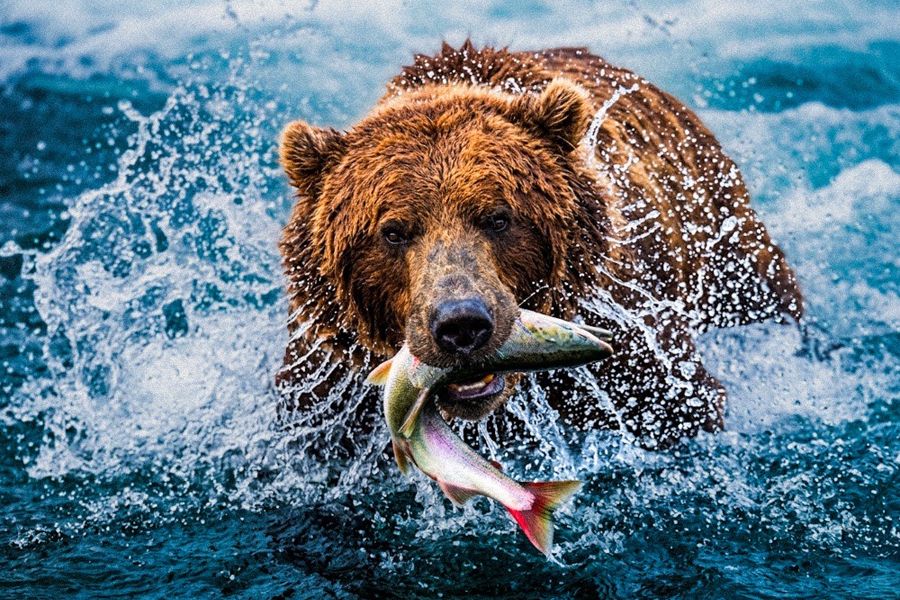
Left: A brown bear fishing in Katmai National Park — patient, precise, and practiced. Right: A Hoonah bear works a shallower stream — the technique varies by location, but the focus never does.
At Brooks Falls you stop trying to count the bears. There are simply too many — forty at the falls, more in the pools below, cubs watching from the bank. Alaska, at its best, refuses to be modest.
Experience Alaska
through Jango's lens
Small-group expeditions to Katmai, Lake Clark, Glacier Bay, Denali, and the Inside Passage — timed around the salmon runs, the aurora season, and the light that Alaska does better than anywhere on earth.
Inquire About a Workshop More Destinations