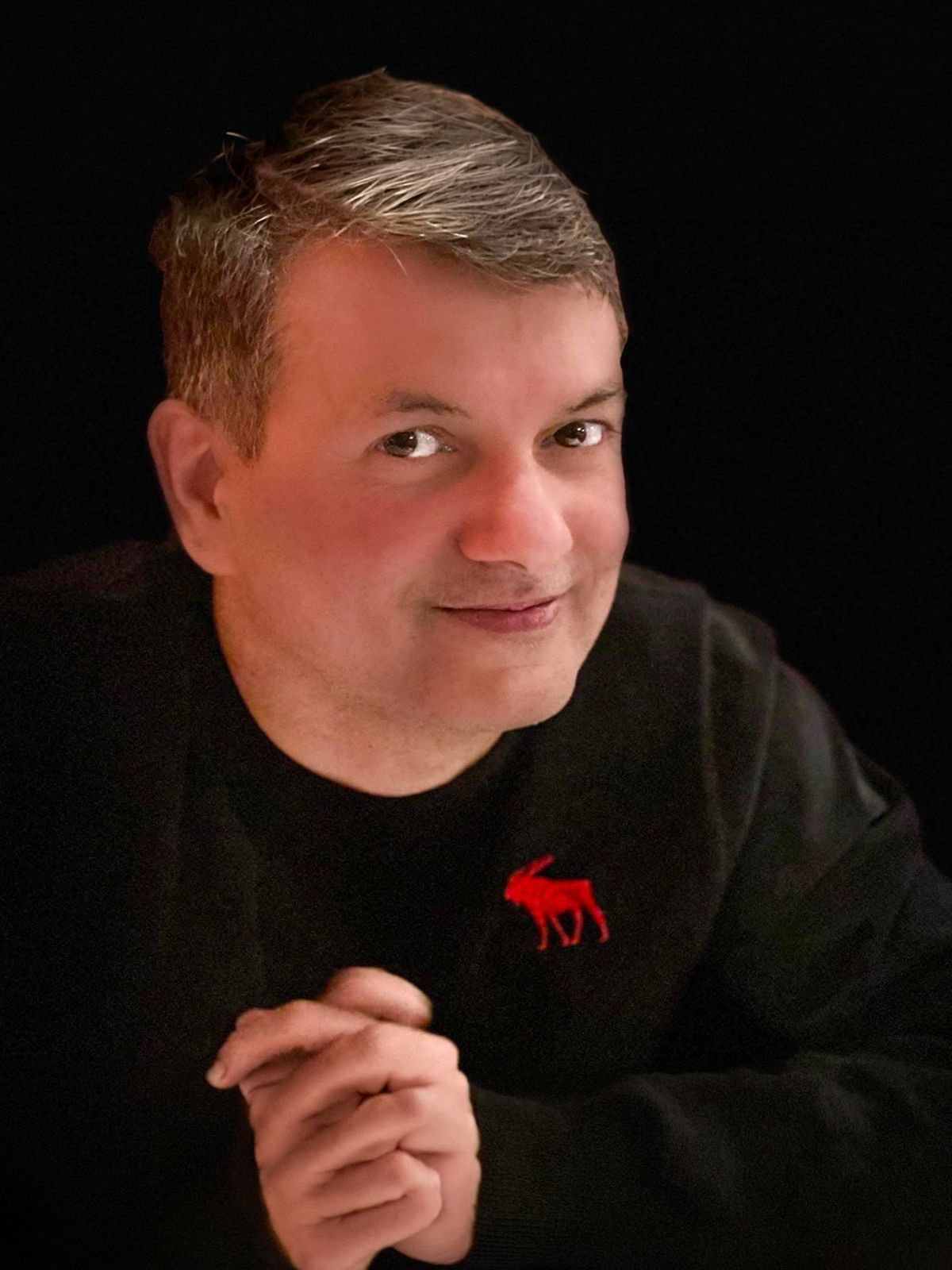
I have spent twenty-seven years in the kind of work that demands everything.
Currently serving as Chief Knowledge Officer for a technology firm, I have spent my career managing large government portfolios, overseeing highly sensitive programs, and advising C-suites and boards on strategy and risk. I have worked across the ASEAN region, across European technology markets, across the full spectrum of the American federal enterprise.
I am good at it. I still find it meaningful.
But alongside that career, for years, I have been pointing a camera at the world in whatever margins the work allowed. A stopover in Nairobi that turned into a morning in Amboseli. A conference in Singapore that ended with a dawn walk through wetlands. Small hours stolen from a schedule that didn't leave many.
Then came Tadoba.
The Moment That Changed Everything
Tadoba-Andhari Tiger Reserve,
Maharashtra, India
It was early morning in the teak forest. The jeep had stopped. The guide raised his hand. In the undergrowth ahead — barely thirty metres away — a Bengal tiger emerged into a shaft of light and sat down in the middle of the track.
She wasn't fleeing. She wasn't performing. She was simply present, in the way that wild animals are present — completely, without apology, without awareness of being observed. She looked at us for what felt like several minutes. Then she rose, walked into the forest, and was gone.
I lowered my camera and understood, with a clarity I hadn't felt in years, what I wanted to spend the rest of my life doing.
I haven't walked away from the corporate world yet — and I'm not sure it would be honest to pretend otherwise. What I am doing, deliberately and with increasing commitment, is building a second body of work serious enough to stand on its own.
The discipline, operational rigor, and strategic thinking of twenty-seven years in the federal sector don't disappear when you pick up a camera. They translate in ways that surprise me. The patience required to wait for the right moment in the field is the same patience required to build an organization worth leading. The attention to detail that keeps a multi-million dollar portfolio on track is the same attention that keeps you still for an hour in the predawn dark, waiting for the light to shift precisely two degrees.
What the corporate world gave me — and what I carry into every expedition — is the ability to work methodically toward a vision, to earn the trust of the people I work alongside, and to produce results that hold up under scrutiny.
What the wild world is giving me in return is harder to describe. A sense of scale. A reminder of what existed long before the first spreadsheet was built. An understanding that the most important stories are the ones that happen whether or not anyone is watching.
The most important stories are the ones that happen whether or not anyone is watching.
Across five continents, over twelve years of expeditions conducted alongside corporate commitments that required the same level of preparation and execution.
The savannas of Tanzania and Kenya. The bear-crowded wilderness of Alaska. The tiger forests of India. The volcanic highlands of Ecuador. The winter geothermal spectacle of Montana and Yellowstone. The urban landscapes of Washington DC, New York, London, and cities across the Middle East and East Asia.
Over a hundred bird species documented. Wildlife encounters across every ecosystem from tropical rainforest to Arctic tundra. A body of work that now spans wildlife, birds, landscapes, cityscapes, and cinematic black and white photography.
Tanzania
Kenya
Alaska
India
Ecuador
Montana
Canada
United Kingdom
UAE
East Asia
Washington DC
New York
Wildlife
Big cats, bears, elephants, primates — apex predators and the ecosystems that sustain them.
Birds of the World
Over a hundred species documented across five continents, from Africa's rollers to Ecuador's hummingbirds.
Expedition Landscapes
Glaciers, volcanoes, geothermal plains, crater lakes — the earth at its most uncompromising scale.
Cityscapes
The same patient eye that reads a savanna reads a city skyline. Urban stories from five continents.
Cinematic B&W
Colour tells you what a place looks like. Black and white tells you what it feels like.
Conservation Storytelling
Imagery that builds the emotional case for protecting what remains — before it no longer needs protecting.
The next chapter is one I am actively building.
I am seeking partnerships with luxury safari operators and expedition companies who want a storyteller with the operational credibility to deliver, not just the creative instinct to see. I am looking to collaborate with tourism boards and conservation organizations on campaigns that need visual depth and narrative intelligence. I want to place work with editorial publications that understand what expedition photography at this level requires.
Fine art prints, editorial licensing, conservation media, photography workshops in the world's great wildlife destinations — these are not distant ambitions. They are the specific directions I am moving in, with the same intentionality I brought to building a twenty-seven year career in a demanding field.
An Invitation
If any of that sounds like a conversation worth having, I would genuinely welcome it. The contact form below is the right place to start.
Luxury safari & expedition partnerships
Tourism board campaigns
Editorial licensing
Conservation media & storytelling
Expedition media production
Photography workshops & guided tours
Fine art print collections
Public speaking
The most important stories are the ones that happen whether or not anyone is watching.
— Jango Unwalla
What I shoot with
Good equipment does not make a photographer. But the wrong equipment in the wrong situation costs you the frame. After twelve years of expeditions across five continents — from predawn game drives in Tadoba to handheld street work in Mumbai at midnight — this is the kit that has earned its place in the bag.
Primary Body
Sony Alpha 1 II
30 frames per second. AI-powered subject recognition that locks onto a bird's eye at 400mm from a moving vehicle. Blackout-free EVF so you never lose the animal between frames. For wildlife — fast, unpredictable, unforgiving wildlife — there is nothing I would rather have in my hands. This is the camera that was in my hands when the tiger sat down in Tadoba.
Secondary Body
Sony Alpha 7R V
61 megapixels. When the story is a landscape that needs to be printed large, or a scene where I need the latitude to crop heavily in post, the A7R V is the body on the second strap. The resolution difference between the two cameras is visible at anything above A2 print size. It earns its weight on every expedition.
In the wild
Primary Wildlife Lens
Sony 400mm f/2.8 GM
f/2.8 at 400mm means subject isolation that no zoom can match — the background dissolves into smooth bokeh and the animal stands completely separate from its environment. More importantly, f/2.8 means usable shutter speeds at ISO 3200 in the predawn dark when the tigers and leopards are most active. This lens is the reason the early morning drives produce the best frames.
Extender
Sony 1.4× Teleconverter
Converts the 400mm to a 560mm f/4 without losing autofocus performance — on the Sony A1 II, the AI tracking still functions perfectly with the converter mounted. For distant birds in flight or skittish antelope that won't allow a close approach, the extra 160mm is the difference between a frame and a near-miss. It adds weight to the bag but earns it back every time.
Versatile Wildlife Lens
Sony 70-200mm f/2.8 GM II
For animals that are close — elephant herds at a waterhole, bear cubs at Brooks Falls, langurs in the canopy above the vehicle — the 400mm is too much. The 70-200mm stays on the second body, covering the situations where proximity, not distance, is the variable. At 200mm f/2.8 it produces frames with the same quality of light and separation as the prime. It also doubles as a portrait lens for Maasai elders, Quechua artisans, and anyone else who will stand still long enough.
On the street
Street & Architecture
Sony 24mm f/1.4 GM
f/1.4 at 24mm in Mumbai at midnight, or the lantern-lit alleys of Quito's Calle La Ronda, or the neon reflections of a Tokyo side street — this lens handles low light in ways that make the images feel found rather than made. Light, fast, and small enough that it doesn't announce itself. The lens that disappears into the city.
All-Day City Lens
Sony 24-105mm f/4 OSS
One body, one lens, every focal length from environmental portrait to compressed cityscape. The 24-105mm is what goes on the camera when the day is long and unpredictable — a full day walking Mysore, or documenting Fort Kochi from the fishing nets to the cathedral. The optical stabilisation means sharp frames even at the long end, handheld, in difficult light. The workhorse lens that makes the others possible.
Support system
Gimbal Head
Wimberley WH-200
A 400mm f/2.8 weighs over 3kg before the body and teleconverter are attached. Handholding it for a full game drive is not realistic. The Wimberley WH-200 gimbal head provides perfectly balanced, friction-free movement in any direction — pan left for a running cheetah, tilt up for a bird in flight, all without fighting the weight of the lens. For any serious wildlife photographer working with super-telephoto glass, this is not optional equipment. It is the reason the frames are sharp.
Coming Soon
Video & Stabilisation
The video workflow is currently being developed — short cinematic clips from the expeditions, graded with custom LUTs for each destination. Details to follow.